News
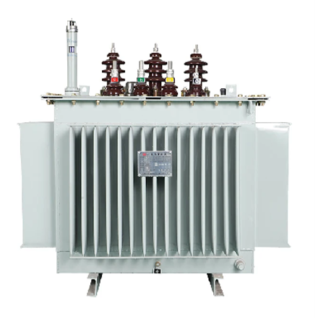
In the world of oil-immersed transformers,transformer oil fills most of the internal space – submerging the iron core and windings. It is an indispensable "blood" for the stable operation of transformers. But why oil specifically? Why not water, air, or other liquids?
This article explains the two key dual roles of transformer oil in oil‑immersed transformers – insulation and cooling – and explores why it has become an irreplaceable choice in power transmission.
The core function of a transformer is voltage conversion – which means an extremely high electric field intensity exists inside. Huge voltage differences are borne between high‑voltage and low‑voltage windings, and between windings and the earthed iron core and tank. Without effective insulation, breakdown discharge would occur in an instant – leading to equipment damage and system failures.
| Property | Benefit |
|---|---|
| High dielectric strength | Pure transformer oil has breakdown voltage of 40‑60kV/2.5mm vs. air at 3‑4kV/mm – withstands higher voltages without breakdown |
| Fills micro gaps | Good fluidity penetrates all tiny gaps – eliminates air bubbles, forming continuous insulation |
| Oil‑paper composite insulation | Combining insulating paper with oil creates breakdown strength much higher than oil or paper alone |
This is a unique advantage of transformer oil. When partial discharge occurs, the generated gas may form bubbles temporarily. However, once discharge stops, surrounding oil flows back quickly – refilling and restoring insulation performance. In contrast, solid insulation damage is often permanent.
Therefore, oil is essential for compact, reliable transformer design.
Transformers generate large amounts of heat during operation – hysteresis and eddy current losses (iron loss) in the core, and resistance losses (copper loss) in windings. If not dissipated in time, temperature rises continuously – causing accelerated insulation aging and eventual thermal breakdown.
The temperature distribution inside a transformer is not uniform. Windings and core are the main heat sources with obvious hot‑spot temperatures. According to IEC standards, the thermal aging rate of insulating paper doubles for every 6‑8°C increase in hot‑spot temperature. Consequently, controlling temperature means controlling transformer service life.
| Method | How It Works | Application |
|---|---|---|
| High specific heat capacity | Absorbs large heat with limited temperature rise | All oil‑filled transformers |
| Natural convection circulation | Hot oil rises, cools at radiator, sinks, recirculates | Most distribution transformers (ONAN) |
| Forced oil circulation | Oil pumps force flow through external coolers | Large high‑voltage transformers (OFAF/ODWF) |
| Cooling Method | Principle | Applicable Scenario |
|---|---|---|
| ONAN | Natural convection + natural air cooling | Small and medium‑sized distribution transformers |
| ONAF | Natural convection + forced air cooling | Medium‑sized power transformers |
| OFAF | Forced oil circulation + forced air cooling | Large high‑voltage transformers |
| ODWF | Forced oil circulation + water cooling | Extra‑large capacity transformers, special occasions |
The two major functions of transformer oil – insulation and cooling – do not exist independently. They interact and restrict each other.
As oil temperature rises, viscosity decreases and cooling improves. However, high temperature accelerates oxidative deterioration – producing acidic substances and sludge. These by‑products reduce insulation performance and can block oil passages, further exacerbating temperature rise. This is the "thermal‑insulation vicious circle."
Therefore, maintaining proper oil temperature (top oil temperature ≤ 95°C) is key to ensuring insulation life.
Transformer oil ages gradually during use – showing:
| Indicator | Consequence |
|---|---|
| Increased dielectric loss factor | Decreased insulation performance |
| Reduced breakdown voltage | More prone to discharge |
| Increased acid value | Corrosion of solid insulation and metal components |
| Sludge precipitation | Hinders heat dissipation – aggravates temperature rise |
Regular oil testing (chromatographic analysis, withstand voltage test, micro‑water test) and necessary treatment (filtration, regeneration, or replacement) are core maintenance tasks.
Beyond insulation and cooling, transformer oil also:
Transformer oil continues to evolve:
| Type | Feature | Application |
|---|---|---|
| High flash point oil (synthetic/natural esters) | Flash point >300°C | Underground substations, high‑rise buildings |
| Natural esters (vegetable oil) | Fully biodegradable, non‑toxic, low carbon | Environmentally friendly transformers |
| Nano‑modified oil | Enhanced thermal conductivity and insulation | Research stage |
Transformer oil plays an irreplaceable dual role in oil‑immersed transformers:
The perfect synergy of insulation and cooling enables oil‑immersed transformers to achieve high‑voltage, large‑capacity energy conversion in a compact size – making them the mainstay of modern power systems. For this reason, transformer oil is known as the "blood" of transformers – its quality and state directly affect performance and service life.
Contact a Xinghe representative today to learn more about our Transformer.