News
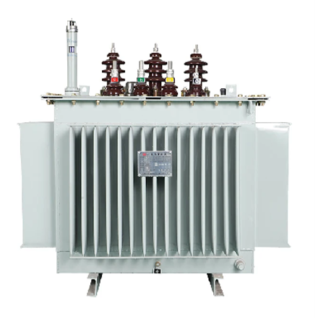
In the whole life cycle of a transformer, loss is one of the core indicators for measuring economic efficiency. An oil-immersed transformer usually operates for 20 to 30 years – and the electricity cost incurred by losses during this period may well exceed the purchase cost of the equipment itself. Therefore,understanding the essence of no‑load loss and load loss – and mastering the methods to reduce them – is crucial for optimizing equipment selection and saving operating costs.
No‑load loss occurs when the secondary side of a transformer is open‑circuited (with no load connected) and the primary side receives the rated voltage. As long as the transformer connects to the power supply, this loss persists continuously – even when it supplies no power to any equipment.
No‑load loss mainly comes from core loss (iron loss):
| Type | Mechanism |
|---|---|
| Hysteresis loss | Heat generated by magnetic domain friction when the iron core repeatedly magnetizes in an alternating magnetic field |
| Eddy current loss | Thermal loss from circulating currents induced inside the iron core by alternating magnetic flux |
We determine no‑load loss through a no‑load test: apply rated voltage to the primary side and measure the input power. The obtained value is the no‑load loss. This value depends primarily on core material, magnetic flux density, and core structure.
Load loss refers to the loss generated when a transformer outputs rated current. This loss changes with load current – acting as the "variable cost" during operation.
Load loss mainly includes:
We measure load loss through a short‑circuit test: short‑circuit the secondary side, apply voltage to the primary side to reach rated current, and measure input power. The obtained value is the load loss – converted to a reference temperature, usually 75°C or 85°C.
Total transformer loss = No‑load loss + Load loss
| Parameter | Characteristic |
|---|---|
| No‑load loss | Constant 24/7 |
| Load loss | Varies with actual load rate |
| Method | How It Works |
|---|---|
| Select high‑quality silicon steel sheets | High‑permeability grain‑oriented silicon steel or amorphous alloy cores significantly reduce hysteresis and eddy current losses |
| Optimize the core structure | Stepped joints, hole‑free lashing, and laser scribing reduce local losses |
| Choose capacity reasonably | Avoid "over‑sized transformer for light load" – select appropriate capacity or use parallel operation and cut off some units during light load |
| Method | How It Works |
|---|---|
| Use high‑conductivity conductors | Copper windings have 30‑40% lower load loss than aluminum windings |
| Optimize winding design | Increase conductor cross‑section and use transposed conductors to suppress skin and proximity effects |
| Control additional loss | Use non‑magnetic materials or magnetic shielding where leakage flux affects components – reducing stray loss |
| Ensure good heat dissipation | Winding resistance increases with temperature – keeping cooling systems clear effectively reduces losses |
| Aspect | No‑Load Loss | Load Loss |
|---|---|---|
| Also known as | Iron loss | Copper loss |
| Occurs when | Transformer energized (regardless of load) | Transformer carries load current |
| Proportional to | Voltage² and frequency | Current² × Resistance |
| How to reduce | Better core material, lower flux density | Larger conductors, better materials, lower temperature |
| Cost impact | Fixed – always present | Variable – grows with load |
No‑load loss and load loss represent the "fixed cost" and "variable cost" of a transformer respectively. Reducing losses runs through the entire life cycle – from material selection and structural optimization to capacity matching and operation management.
Key takeaway: While paying attention to initial purchase cost, focus on the whole life cycle cost. Selecting high‑efficiency oil‑immersed transformers that match actual working conditions is the key path to achieving energy conservation, consumption reduction, and lower operating costs.
Contact a Xinghe representative today to learn more about our Transformer.