News
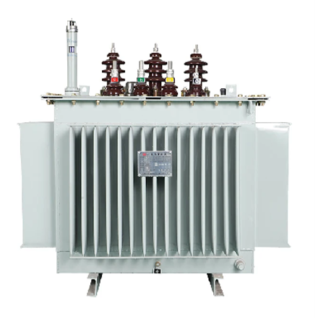
An oil-immersed transformer is an indispensable core device in power systems – undertaking the key tasks of voltage conversion and electrical energy transmission. For many non-professionals, a transformer may seem like a bulky "iron box."However, its interior actually performs a sophisticated "electromagnetic synergy." This article explains the working principle of oil-immersed transformers in clear terms – focusing on how electromagnetic induction and insulating oil work together to ensure stable equipment operation.
The working principle of an oil-immersed transformer is based on the law of electromagnetic induction – discovered by the British physicist Michael Faraday in the 19th century.
The transformer consists of two main parts: the iron core and the windings.
| Component | Description | Function |
|---|---|---|
| Iron core | Laminated silicon steel sheets with high magnetic permeability | Forms a closed magnetic circuit – reduces hysteresis and eddy current losses |
| Windings (coils) | Copper or aluminum wire – primary (input) and secondary (output) | Carries current and induces voltage transformation |
When the primary winding connects to an AC power supply, the alternating current generates an alternating magnetic flux in the iron core. This flux passes through the secondary winding and induces an electromotive force according to Faraday's Law. When you connect a load to the secondary winding, current flows – thus realizing electrical energy transmission.
Voltage relationship: Voltage is proportional to the number of turns. By adjusting the turns ratio, we achieve voltage step‑up or step‑down.
Examples:
Therefore, electromagnetic induction is the "core soul" of transformer operation.
If electromagnetic induction is the core function, then insulating oil is the "loyal guardian" that ensures safe and stable operation. An oil‑immersed transformer gets its name because both the iron core and windings are immersed in insulating oil.
| Function | How It Works | Benefit |
|---|---|---|
| Insulation | Oil‑paper barrier structure (insulating cardboard + cable paper + oil) isolates high‑voltage from low‑voltage windings and grounded components | Prevents arc breakdown and discharge faults |
| Cooling | High specific heat capacity absorbs heat; hot oil rises to radiators, cools, and recirculates | Maintains low temperature during long‑term operation – improves load capacity |
Beyond insulation and cooling, insulating oil also:
Now that we understand both functions, let's see how they work together:
During normal operation:
Circulating cooling path:
Windings generate heat → heat transfers to insulating oil → hot oil rises to radiators → cooled oil returns to tank bottom → cycle continues
Insulation coordination system:
Under strong electric fields, the oil‑paper insulation structure shares the voltage load – forming a multi‑layer barrier that significantly improves breakdown strength.
Consequently, this exquisite synergy enables oil‑immersed transformers to operate stably for decades under high‑voltage, high‑current conditions.
An oil‑immersed transformer realizes electrical energy conversion and transmission through electromagnetic induction – while achieving electrical insulation and heat dissipation through insulating oil. Like interlocking gears, they form a highly efficient and reliable power conversion system.
It is this classic "electromagnetic induction + oil medium" design that makes oil‑immersed transformers the mainstay of power systems for over a century – from giant step‑up transformers at the Three Gorges Power Station to distribution boxes on every street, from offshore wind farms to high‑speed rail traction stations.
Contact a Xinghe representative today to learn more about our Transformer.