News
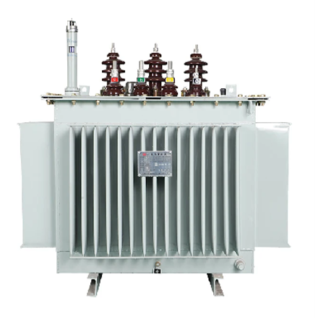
In the world of oil-immersed transformers, there is a seemingly ordinary yet crucial substance—transformer oil. It fills most of the internal space of a transformer, submerging the iron core and windings, and is an indispensable "blood" for the stable operation of transformers. So why oil specifically? Why not water, air, or other liquids?
This article will delve into the two key dual roles of transformer oil in oil-immersed transformers: insulation and cooling, and explore why it has become an irreplaceable choice in power transmission.
The core function of a transformer is voltage conversion, which means an extremely high electric field intensity exists inside—huge voltage differences are borne between the high-voltage and low-voltage windings, and between the windings and the earthed iron core and oil tank. Without effective insulation measures, breakdown discharge will occur in an instant, leading to equipment damage and system failures.
Transformer oil is an excellent insulating medium mainly due to the following properties:
This is a very unique advantage of transformer oil. When partial discharge or slight breakdown occurs in the oil, the generated gas may form air bubbles temporarily. But once the discharge stops, the surrounding oil will flow back quickly, refill the area, and restore the insulation performance. In contrast, once solid insulation is broken down, the damage is often permanent.
What would happen if we tried to use air as the insulating medium?
Transformers generate a large amount of heat during operation—hysteresis loss and eddy current loss (iron loss) in the iron core, as well as resistance loss (copper loss) in the windings, are all converted into thermal energy. If the heat is not dissipated in time, the temperature will rise continuously, causing accelerated aging of insulating materials and eventually thermal breakdown.
The temperature distribution inside a transformer is not uniform. The windings and iron core are the main heat sources with obvious hot-spot temperatures. According to the standards of the International Electrotechnical Commission (IEC), the thermal aging rate of insulating paper doubles for every 6-8K increase in the hot-spot temperature of transformer windings. Controlling the temperature is controlling the service life of the transformer.
The cooling effect of transformer oil is mainly achieved through the following methods:
① High specific heat capacity and thermal conductivityThe specific heat capacity of transformer oil is about 40-50% of that of water, but much higher than that of air. It can absorb a large amount of heat with a limited rise in its own temperature, making it an ideal medium for heat absorption and transfer.
② Natural convection circulationThis is the most typical cooling method for oil-immersed transformers. The process is as follows:
This natural convection mechanism without external power enables the transformer to perform continuous and automatic heat exchange.
③ Forced oil circulationFor large high-voltage transformers (such as power plant step-up transformers), natural convection alone is not sufficient to meet the heat dissipation requirements. In this case, oil pumps are installed to force the oil flow through external coolers (air-cooled or water-cooled) for more efficient heat dissipation.
The heat dissipation of a transformer is a systematic synergistic process:
| Cooling Method | Principle | Applicable Scenario |
| ONAN (Oil-immersed Natural Air Cooling) | Natural convection + natural air cooling | Small and medium-sized distribution transformers |
| OFAF (Oil-immersed Forced Air Cooling) | Natural convection + forced air cooling | Medium-sized power transformers |
| OFAF (Forced Oil Circulation Forced Air Cooling) | Forced oil circulation by oil pump + forced air cooling | Large high-voltage transformers |
| ODWF (Forced Oil Circulation Water Cooling) | Forced oil circulation by oil pump + water cooling | Extra-large capacity transformers, special occasions |
The two major functions of transformer oil, insulation and cooling, do not exist independently but interact and restrict each other.
This is a typical synergistic relationship: when the oil temperature rises, its viscosity decreases, fluidity improves, and the cooling effect is enhanced—however, high temperature will accelerate the oxidative deterioration of the oil, producing acidic substances and sludge. These deterioration products will reduce the insulation performance of the oil and even block the oil passages, further exacerbating the temperature rise. This is the so-called "thermal-insulation vicious circle".
Therefore, maintaining an appropriate oil temperature (usually the top oil temperature does not exceed 95℃) is the key to ensuring the insulation life.
Transformer oil will age gradually during use, mainly manifested in:
For this reason, regular testing of transformer oil (chromatographic analysis, withstand voltage test, micro-water test) and necessary treatment (filtration, regeneration or replacement) are the core work of transformer operation and maintenance.
In addition to the two major roles of insulation and cooling, transformer oil also plays some supporting but equally important roles:
When an electric arc occurs inside a transformer with an on-load tap changer (OLTC) or protection devices, the oil can extinguish the electric arc quickly. The high temperature of the arc decomposes the oil, generating a large amount of gas (mainly hydrogen), which quickly forms high-pressure air bubbles to blow out the electric arc and restore the insulation strength.
The oil submerges the metal components, isolating oxygen and moisture in the air, and slowing down the rusting of the iron core and the hydrolytic aging of insulating materials.
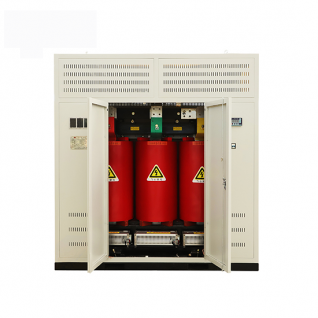
The magnetostrictive effect of the iron core will generate vibration and noise. The iron core and windings submerged in oil have their vibrations transmitted through the oil medium and partially attenuated, making the operating noise of oil-immersed transformers significantly lower than that of dry-type transformers of the same capacity.
With the improvement of environmental awareness and the development of power systems, transformer oil is also evolving continuously:
Transformer oil plays an irreplaceable dual role in oil-immersed transformers:
The perfect synergy of insulation and cooling enables oil-immersed transformers to achieve high-voltage and large-capacity electric energy conversion in a compact size, making them the mainstay of modern power systems. For this reason, transformer oil is known as the "blood" of transformers, and its quality and state directly affect the performance and service life of transformers.
For transformer users, understanding the role of transformer oil and attaching importance to oil testing and maintenance lay the solidest foundation for the long-term stable operation of transformers.
Contact a Xinghe representative today to learn more about our Transformer.