News
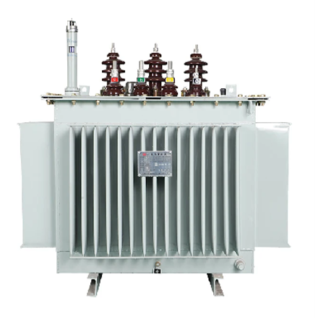
In the power system, the oil-immersed transformer is an indispensable core device that undertakes the key tasks of voltage conversion, electrical energy transmission and distribution. For many non-professionals, a transformer may just be a bulky "iron box", but its interior is actually a sophisticated "electromagnetic synergy performance". This article will explain the working principle of oil-immersed transformers in a simple and in-depth way, focusing on how electromagnetic induction and insulating oil work together to ensure the stable operation of the equipment.
The working principle of an oil-immersed transformer is based on the law of electromagnetic induction, a great physical phenomenon discovered by the British physicist Michael Faraday in the 19th century.
The core of a transformer consists of two main parts: the iron core and the windings.
When the primary winding is connected to an AC power supply, the alternating current generates an alternating magnetic flux in the iron core. This alternating magnetic flux passes through the secondary winding, and an electromotive force is induced in the secondary winding according to the law of electromagnetic induction. When a load is connected to the secondary winding, a current is generated, thus realizing the transmission of electrical energy.
This process can be simply expressed by a formula: the voltage is proportional to the number of turns. Voltage step-up or step-down can be achieved by adjusting the turn ratio of the primary and secondary windings. For example, in power plants, step-up transformers raise the generator outlet voltage (10.5-20kV) to an ultra-high voltage level of 220kV or even higher for long-distance transmission of electrical energy; in distribution networks, step-down transformers reduce the high voltage to 400V for use by end users.
If electromagnetic induction is the "core soul" of transformer operation, then insulating oil is the "loyal guardian" that ensures the safe and stable operation of this process.
An oil-immersed transformer gets its name precisely because its iron core and windings are both immersed in insulating oil. Insulating oil plays a dual role in the transformer:
② Cooling functionA large amount of heat is generated in the iron core and windings during the operation of the transformer. Transformer oil has the characteristic of high specific heat capacity and can effectively absorb this heat. The hot oil rises to the top of the oil tank through natural convection (or forced oil circulation), dissipates the heat to the external environment through the tank wall and radiators, and the cooled oil sinks back to the bottom of the transformer to form a continuous circulating cooling. This process enables the transformer to maintain a low temperature during long-term operation and improve the load capacity of the equipment.
In addition to insulation and cooling, insulating oil also protects the iron core and windings:
Having understood the respective functions of the two, let us now see how they work together:
When the transformer is in normal operation, the electromagnetic induction process generates voltage conversion and heat. At this time, insulating oil acts as both an "isolation wall" and a "coolant" — it surrounds the windings and iron core that are generating magnetic fields, ensuring that high-voltage electrical energy is safely converted into low-voltage electrical energy, and at the same time taking away the heat generated by electromagnetic induction.
Circulating cooling path: Heat generated by windings → transferred to insulating oil → hot oil rises to the radiator → flows back to the bottom of the oil tank after cooling → continues to absorb heat.
Insulation coordination system: Under the action of a strong electric field, the oil gaps and cardboard in the oil-paper insulation structure bear the voltage together to form a multi-layer barrier, which significantly improves the breakdown strength.
It is this exquisite synergy that enables oil-immersed transformers to operate stably for decades under the harsh conditions of high voltage and large current.
An oil-immersed transformer realizes the conversion and transmission of electrical energy through electromagnetic induction, and realizes electrical insulation and heat dissipation through insulating oil. Like sophisticated gears, the two interlock and cooperate with each other to form a highly efficient and reliable power conversion system.
It is this classic "electromagnetic induction + oil medium" design that makes oil-immersed transformers the mainstay of the power system for a century — from the giant step-up transformers in the Three Gorges Power Station to the distribution boxes on every street, from offshore wind farms to high-speed rail traction stations, they have always supported the power demand of modern society with stable and reliable performance.
If you have further questions about the selection, installation or maintenance of oil-immersed transformers, please feel free to contact us for professional technical support.
Contact a Xinghe representative today to learn more about our Transformer.