News
When discussing transformers, power lines, and their effects on public health, we must use precise terminology. The correct terms are "electric field" and "magnetic field" – not "electromagnetic radiation." This article clarifies why this distinction matters, explains the science behind power frequency fields, and provides authoritative references to dispel common misconceptions.
The term "electromagnetic radiation" belongs to radio communications and electromagnetic compatibility engineering. It describes energy emitted as waves from a source into space. However, applying this term to power transmission facilities is inappropriate because these systems are designed for energy transfer – not electromagnetic wave propagation.
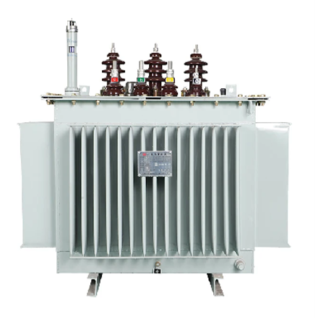
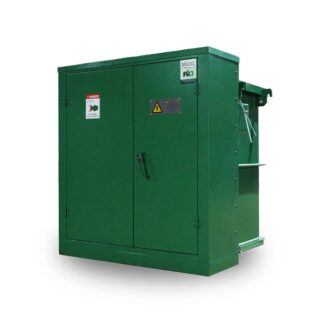
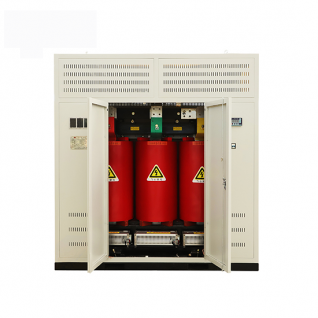
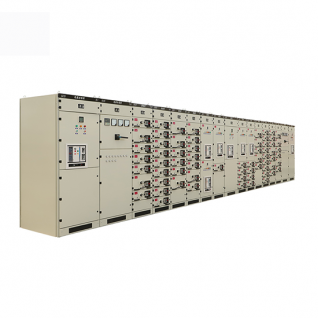
Therefore, we should use "electric field," "magnetic field," or collectively, "electromagnetic field" when discussing equipment such as transformers, substations, and transmission lines.
The electromagnetic fields from AC power transmission operate at extremely low frequencies (50 Hz) , with wavelengths reaching 6,000 km. Since transmission lines are far shorter than these wavelengths, they cannot effectively radiate electromagnetic energy.
| Feature | Power Frequency Fields (50/60 Hz) | High‑Frequency Radiation (Radio, Microwave) |
|---|---|---|
| Field behavior | Electric and magnetic fields are independent and static | Electric and magnetic fields alternate to propagate energy |
| Ability to radiate | Minimal – non‑radiative | Effective – radiative |
| Wavelength | 6,000 km (50 Hz) | Meters to centimeters |
| Suitable term | Electric/magnetic field | Electromagnetic radiation |
Authoritative bodies consistently use precise terminology:
These organizations do not use the term "electromagnetic radiation" for power transmission facilities.
The inaccurate use of "electromagnetic radiation" in some publications has contributed to:
Consequently, globally recognized institutions emphasize scientifically precise language – this is a critical step in ensuring accurate risk communication and evidence‑based policies.
ZG Power Automation serves not only as a communication network for power professionals but also as a platform for technology enthusiasts and students to showcase their expertise.
Compared to traditional knowledge‑sharing platforms, it offers:
By leveraging these advantages, ZG Power Automation bridges connections among industry peers – fostering collaboration, skill development, and technological advancement.
| Point | Fact |
|---|---|
| Correct terminology | Electric field, magnetic field, or electromagnetic field |
| Incorrect terminology | Electromagnetic radiation (for power frequency equipment) |
| Operating frequency | 50/60 Hz (extremely low frequency) |
| Wavelength | ~6,000 km at 50 Hz – far longer than transmission lines |
| International consensus | WHO, NIEHS, ICNIRP all use "power frequency fields" |
| Communication impact | Precise language prevents public misunderstanding |
Contact a Xinghe representative today to learn more about our Transformer.