News
In the global wave of energy transition, photovoltaic (PV) power generation has become a backbone of renewable energy systems. From large-scale ground-mounted plants to commercial and industrial distributed projects, every PV plant faces the same technical challenge: how to efficiently and stably connect the low-voltage AC power produced by inverters to the medium- or high-voltage grid. The core device that solves this problem is the PV step-up transformer – a critical component of the step-up substation.
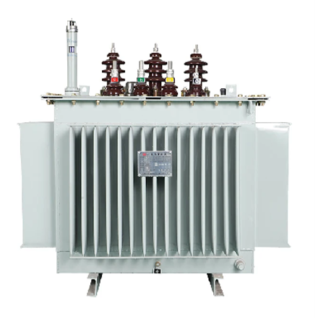
Among the various transformer types, oilimmersed transformers have been widely adopted in PV plants due to their unique technical characteristics. This article discusses “why choose oilimmersed” and “how to select the right transformer” for EPC contractors, PV plant investors, and technical engineers.
Before understanding “why oil-immersed”, it is essential to understand the basic function of a PV stepup transformer. PV modules convert sunlight to DC power, and inverters convert DC to AC. Because PV plants are often located far from the grid connection point and the lowvoltage AC output of the inverters (typically 400 V–800 V) is not suitable for longdistance transmission, the voltage must be stepped up to medium voltage (e.g., 10 kV, 35 kV or higher) to reduce line losses and meet grid connection requirements. The core function of a PV stepup transformer is exactly this: stepping up low voltage to medium/high voltage.
During stepup, oil-immersed transformers play two main roles:
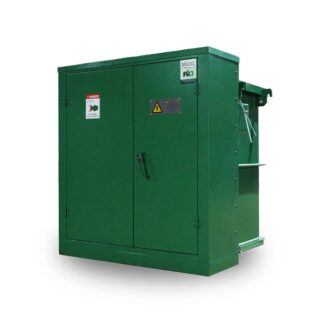
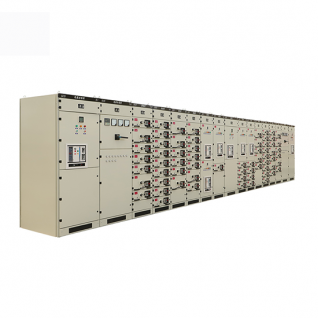
In large PV plants, the PV array is usually divided into several generation units. Each unit is served by a compact (prefabricated) substation that integrates an oilimmersed step-up transformer, MV switchgear, LV switchgear, and auxiliary equipment. This readytoinstall structure achieves local stepup and raises the inverter output voltage to medium voltage (e.g., 35 kV). Such local stepup transformers should be selected as selfcooled, low noload loss energyefficient products in accordance with standards like GB 50797, and the compact substation form is recommended.
After the mediumvoltage power from each generation unit is collected on the plant’s stepup busbar, a main transformer further steps up the voltage to an even higher transmission level (e.g., 110 kV or 220 kV) for delivery to the remote grid. This level also uses oilimmersed transformers as the “main exit” of the plant.
In practice, there is often a tradeoff between oil-immersed and drytype transformers. PV plants are virtually all located outdoors, facing strong sandstorms, high humidity, saltspray corrosion, large daynight temperature differences, and other harsh conditions. In addition, the PV output profile (peak power at midday, nearly zero at night) imposes high thermal cyclic stress.
PV plant operation has significant intermittency and periodicity – continuous full-power output during sunny daylight hours, and almost no load from dusk to dawn. This severe load fluctuation and highfrequency thermal cycling demands superior thermal management from the transformer.
Oilimmersed transformers use mineral oil or natural ester as both coolant and dielectric. The oil’s high specific heat capacity and circulating cooling mechanism effectively absorb and dissipate heat generated during operation. When sudden power surges occur (e.g., due to cloud-edge effects causing temporary over-power), the thermal mass of the insulating oil acts as a “thermal buffer” that absorbs shortterm heat shocks without immediate insulation damage – a critical advantage for variable renewable energy sources like PV and wind. As a result, oil-immersed stepup transformers have become the absolute mainstream in compact substations widely used in PV plants today.
PV plants are often located in deserts, Gobi areas, saline-alkali flats, or other remote, harsh environments. Equipment must withstand strong sandstorms, high humidity, salt-spray corrosion, UV aging, etc. In an oilimmersed transformer, the core and windings are completely sealed in insulating oil. The tank body is treated with a high-corrosionresistance coating (e.g., C5-M), which effectively resists salt spray in coastal areas, sand and dust in desert PV farms, and high humidity near tropical hydropower stations, ensuring up to 30 years of reliable service life.
For PV plants, instantaneous overload events (e.g., power peaks during strong irradiance) are routine operating scenarios. Thanks to the thermal mass of the oil and good heat dissipation, oil-immersed transformers have strong short-term overload capability. Moreover, oil as an insulating medium maintains high dielectric strength, making it irreplaceable for high-voltage (HV) and extra-high-voltage (EHV) applications – dry-type transformers are typically limited to 35 kV, while oilimmersed types can easily extend to 500 kV and above, covering everything from MV collection to longdistance transmission.
Conventional views have raised environmental concerns about oil-immersed transformers, especially risk of leakage in ecologically sensitive areas. However, a key breakthrough has provided a fundamental solution: natural ester insulating fluids derived from vegetable oils. Natural esters are fully biodegradable and non-toxic, and their fire point exceeds 300 °C (mineral oil ≈170 °C), meeting international “K-class” fire safety standards – allowing safe use in forests or coastal wind farms. Chinese standards also encourage low-loss, self-cooled energy-efficient oil-immersed transformers. This evolution makes oil-immersed transformers truly achieve a balance of “high capacity + strong insulation + environmental friendliness”.
Modern PV plants are fully integrated into smart grid systems, requiring a higher degree of digitalization and intelligence from transformers. Newgeneration oilimmersed transformers are commonly equipped with builtin online monitoring devices such as dissolved gas analysis (DGA) sensors. These analyze changes in characteristic gases (hydrogen, acetylene, carbon monoxide) in real time to effectively predict hidden faults like winding overheating or partial discharge. Further IoT and digital technologies enable full lifecycle data management and smart dispatch from design and manufacturing to operation and maintenance, significantly improving plant safety and O&M efficiency.
Choosing the right step-up transformer is not only the foundation for reliable grid connection but also a critical link in optimizing the levelized cost of electricity (LCOE). The following are key selection considerations for PV stepup substations:
Both types have clear advantages and disadvantages:
Oilimmersed (including natural ester) – Suitable for largescale plants requiring strong heat dissipation, tough outdoor environments, and high overload resilience. Their superior thermal management, corrosion resistance, and durability make them widely used in PV step-up applications. At the same capacity, oil-immersed transformers are often slightly cheaper than dry-type, offering significant costeffectiveness for large, cost-sensitive projects. Typical ratings reach tens of MVA, primary voltage from 6 kV to 35 kV or higher; cooling ONAN or ONAF.
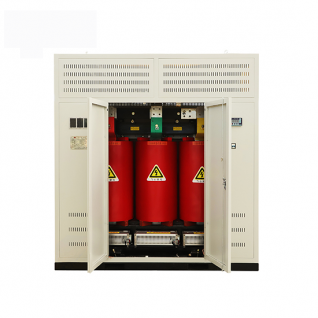
Dry-type (air-insulated) – Suitable for rooftop urban installations, BIPV, energy storage areas, or indoor/containerized spaces where fire safety and zero-leakage are strict requirements, but with limited outdoor endurance and typically below 10 MVA.
In practice, project owners and designers should compare lifecycle costs based on local climate, site conditions, operating model, and grid requirements.
Transformer rating (kVA) must be closely matched to the maximum AC output power of the PV inverters, ensuring that inverters operate stably at near-unity power factor. PV array output is primarily resistive (current and voltage nearly in phase), unlike traditional industrial motor loads (power factor ≈0.8). Blindly following the 0.8 PF rule may oversize the transformer by 25%, raising initial cost and increasing noload and load losses over the whole life. Undersizing can cause tripping, overheating, and accelerated aging.
Generally, a 10–20% capacity margin should be allowed to account for losses, future small expansions, and possible derating in hightemperature conditions. In designs with distributed PV or multiple inverters feeding into one transformer, ensure electrical isolation (do not use auto-transformers) to avoid circulating currents and parasitic interference. If multiple inverters without high-frequency circulation suppression share the same step-up transformer, a split transformer with a splitting factor of at least 3 should be used to effectively suppress interinverter circulation.
Both primary and secondary rated voltages must satisfy inverter AC output voltage and medium-voltage bus/grid connection voltage. The low-voltage side must match the inverter (e.g., 480 V, 690 V, 800–1000 V), while the highvoltage side must correspond to the MV collection system (11 kV, 22 kV, 33 kV, etc.) or an even higher transmission level.
For tapchanging: off-circuit (de-energized) tap-changing is usually preferred for local step-up transformers in PV plants (±2 × 2.5% range), covering moderate voltage fluctuations. When system voltage regulation is insufficient, voltage fluctuations are large, or the plant is connected to a weak grid, on-load tap-changing (OLTC) may be considered after proper calculation and techno-economic justification. However, given the nighttime no-load profile of PV plants, OLTC generally has lower priority for ordinary PV plants. For main substation transformers, either de-energized or on-load tap-changing is chosen based on system needs.
The transformer impedance percentage (%Z) must be coordinated with the maximum shortcircuit current that PV inverters can withstand and the protection relay settings. If %Z is too low, shortcircuit currents may exceed inverter withstand or switchgear breaking capacity. If %Z is too high, excessive voltage drop during rapid inverter power ramping may limit power export. Detailed shortcircuit and voltage dip simulations should be performed to determine the optimal %Z, and ensure the selected transformer meets grid code requirements for high fault ridethrough capability.
Grid connection must strictly follow the technical standards and guidelines of the country/region:
US market – Comply with IEEE, ANSI, NEMA, FERC interconnection rules, and refer to IEEE C57.1592016, which specifically addresses technical requirements for liquid-immersed and dry-type transformers used in distributed PV generation systems.
Europe – Comply with IEC/EN standards and regional interconnection guides (e.g., German VDEARN 4105/4110, UK G99).
China and other Asian markets – Refer to GB 50797-2012, NB/T 32004, etc. The enclosure rating for local stepup transformers should be at least IP54 (fully enclosed to resist windblown sand and high humidity).
The transformer should also be capable of bidirectional power flow (PV + storage hybrid systems), low total harmonic distortion (THD), and prevention of DC injection causing core saturation.
PV inverters use IGBT high-frequency pulse-width modulation (PWM) technology, introducing high-order harmonics and a small residual DC component into the AC output waveform. These harmonics generate additional stray losses and extra heating in transformer windings and metallic structures. Without mitigation, they seriously accelerate insulation aging and increase no-load and load losses. Therefore, PV-dedicated stepup transformers place greater emphasis on low no-load losses (to reduce night-time standby losses) and low load losses (to cut total peak-period consumption). Using a K-factor design or low-harmonic-loss shielding construction, and adopting Dyn11 or Ynd11 vector groups to block thirdharmonic currents and control zerosequence currents/grounding, is recommended.
In the current “transformer supercycle” with tight supply-demand, lead time has become one of the biggest variables affecting whether a PV plant can be commissioned on schedule. Purchasers should carefully evaluate overall supplier capabilities, balance initial transformer price against full lifecycle cost, and for non-standard parameters (e.g., integrated tap changers, smart protection) coordinate with the supplier early to ensure major equipment is delivered and passes factory acceptance testing as quickly as possible.
Oilimmersed transformers have become the mainstream technical choice for PV plant stepup applications, thanks to their excellent heat dissipation efficiency, tolerance to harsh outdoor environments, outstanding overload resilience, and adaptability to high voltage levels. With the mature application of green technologies such as natural ester insulating fluids, the earlier environmental concerns about oilimmersed transformers are rapidly fading. Their combined advantages of “high capacity + strong insulation + green compatibility” are increasingly evident.
Today, as the global PV market booms and transformer supply chains face uncertainty, scientifically selecting oil-immersed transformers – managing capacity matching, voltage levels, grid code compliance, and supplier reliability – is not only the foundation for grid interoperability and longterm safe operation, but also a core step in optimizing return on investment and achieving lower LCOE.
Contact a Xinghe representative today to learn more about our Transformer.