News
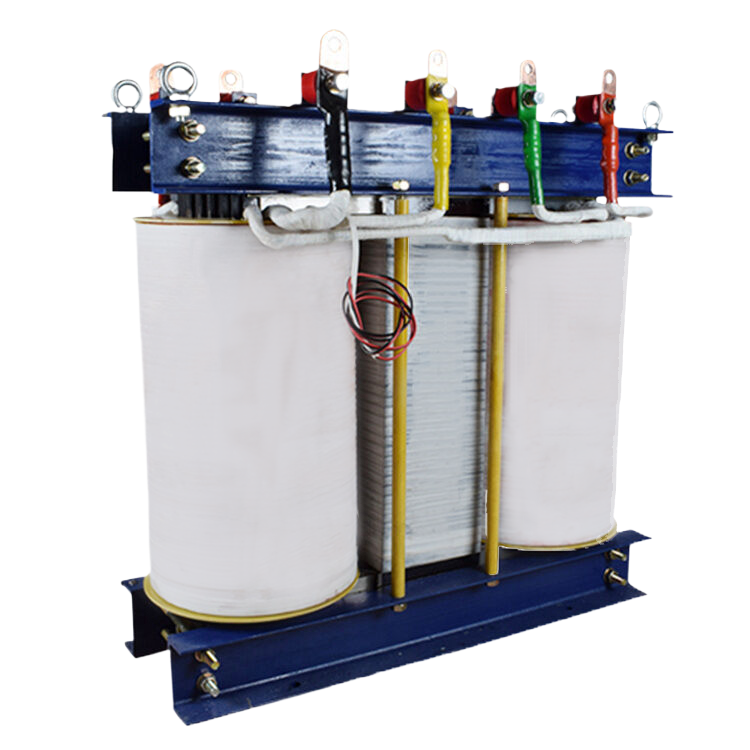
A Scott transformer (also known as a Scott-T transformer) is a specialized phase conversion device that converts two‑phase power to three‑phase power – or alternatively, single‑phase to two‑phase. By connecting two single‑phase transformers with a 90‑degree phase difference, this clever design delivers reliable three‑phase output where only two‑phase or single‑phase supply is available. This guide explains the working principle, advantages, limitations, and common applications of the Scott transformer.
The Scott transformer uses two single‑phase transformers, known as the main winding and the auxiliary (teaser) winding. The auxiliary winding has a 90‑degree phase difference from the main winding. By carefully designing the turns ratio and phase relationship, the transformer converts two‑phase input into balanced three‑phase output – or performs the reverse conversion.
Therefore, the Scott transformer provides a simple and effective solution for phase conversion in many power systems.
| Advantage | Benefit |
|---|---|
| Phase Conversion Capability | Efficiently converts two‑phase to three‑phase (or single‑phase to two‑phase), increasing system flexibility |
| Simple and Reliable Structure | Robust design with straightforward operation – easy to install and maintain |
| Cost‑Effective Solution | Lower cost compared to other phase conversion equipment, such as rotary converters or electronic VFDs |
| Versatile Applications | Suitable for power systems, distribution networks, laboratories, and educational settings |
| Limitation | Consideration |
|---|---|
| Power Limitations | Capacity is limited – may not suit high‑power applications (typically used below several hundred kVA) |
| Additional Space Requirement | Requires space for two transformers, which may be a constraint in compact installations |
| Phase Adjustment Complexity | Phase balancing may require careful design and tuning, especially under varying loads |
Scott transformers are widely used in industrial settings to convert two‑phase supply into three‑phase power – meeting the needs of motors, machinery, and other electrical equipment in facilities that lack three‑phase utility access.
In research and testing labs, Scott transformers provide flexible phase conversion for experiments involving three‑phase circuits, motor drives, and power system simulation.
In some regions where three‑phase supply is unavailable, Scott transformers convert single‑phase power into three‑phase power to support local distribution needs.
Power engineering programs use Scott transformers to demonstrate phase conversion principles, making them valuable teaching tools for electrical engineering students.
| Method | Advantages | Disadvantages |
|---|---|---|
| Scott Transformer | Simple, reliable, cost‑effective | Limited power, requires space |
| Rotary Converter | Higher power capacity | Noisy, higher maintenance |
| Static VFD | Precise speed control | Higher cost, complex electronics |
| Capacitor‑Start Converter | Low cost for small motors | Poor voltage regulation, limited to motor starting |
Therefore, for clean, reliable phase conversion with minimal maintenance, the Scott transformer remains an excellent choice – especially for medium‑power applications.
Contact a Xinghe representative today to learn more about our Transformer.