News
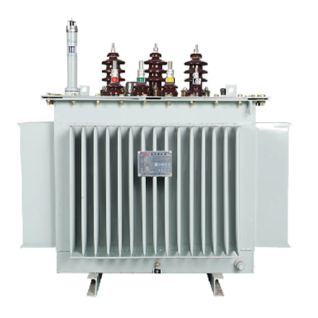
Direct conclusion: The S15 uses an amorphous alloy core and has a clear advantage in no-load loss. It suits projects with long-term light load or no-load operation, such as 24-hour unattended substations. The S22 uses high-grade grain-oriented silicon steel and meets China's Grade 1 energy efficiency standard. It offers balanced total loss, stronger short-circuit withstand and better overload capability, making it a better fit for fluctuating loads, grid tenders, renewable energy and general industrial distribution. The right choice depends on annual operating hours, load factor, electricity price, project budget and energy efficiency requirements — not simply on which model is newer.
Many mining, solar, factory distribution and EPC project teams run into the same selection mistakes when choosing energy-efficient distribution transformers.
| Comparison item | S15 transformer (amorphous alloy) | S22 transformer (high-grade silicon steel, Grade 1 efficiency) |
|---|---|---|
| Core material | Amorphous alloy | High-grade grain-oriented silicon steel |
| Core advantage | Very low no-load loss, low no-load current | Balanced total loss, strong load-loss control, good short-circuit withstand |
| Limitations | Weaker overload capability, moderate high-temperature stability, higher purchase cost, slightly higher noise | Higher no-load loss than S15; higher electricity cost in long-term no-load or standby applications |
| Efficiency positioning | High-efficiency energy-saving route; mainstream model in the amorphous alloy range | Mainstream Grade 1 efficiency silicon steel distribution transformer under current Chinese standards |
| Suitable load | Long-term light load, high no-load share, 24-hour continuous operation | Fluctuating load, frequent full load, short-time overload, grid-connected projects |
| Price range | Higher purchase cost at the same capacity | Balanced cost-performance; mature standardized supply |
| O&M characteristics | Higher requirements for sealing and moisture protection; amorphous core is more brittle and needs protection during transport and lifting | Mature production process, strong spare parts commonality, easier on-site maintenance |
Note: The table is for selection reference only. Final loss values and performance indicators should be based on the manufacturer's type test report.
Choose the S15 when the transformer is energized for long periods with low load:
Choose the S22 when the load fluctuates significantly:
Matching parameters to operating conditions is only the first step. Custom adjustments, factory testing, acceptance documentation and emergency repair support also affect project schedule.
Luoyang Xinghe Special Type Transformer Co.,Ltd. has long experience in industrial and mining special transformers. The S15 and S22 series are both regular production lines and can be customized for altitude, anti-corrosion requirements, vector groups and other project conditions, rather than being limited to standard models.
Core processes — core processing, coil winding, body assembly, insulation processing and complete-unit type testing — are carried out in the company's own plant. This gives more flexibility in design adjustments and factory verification.
Beyond equipment supply, the group holds an electric power facility installation (repair, testing) license, so on-site testing, maintenance and emergency repair can be arranged together with equipment delivery, reducing coordination across multiple parties.
The company's service coverage focuses on Henan, Shanxi, Shaanxi and Inner Mongolia. Technical personnel can attend sites in Henan quickly, and engineers can be arranged for commissioning and testing at out-of-province projects. As a high-tech enterprise, the company has in-house design and testing capability for transformers at 110 kV and below. Products carry CCC, CQC and CE certification, and complete test documentation is available for grid and EPC project submission and acceptance.
Q: Is the S22 always the better choice because it meets Grade 1 efficiency?
A: No. The S22's Grade 1 efficiency advantage shows up mainly under loaded operation. If the transformer runs at no-load or light load for most of the year, the S15's low no-load loss from amorphous alloy can deliver greater electricity savings. Calculate the payback period against the actual load curve before deciding.
Q: Are S15 amorphous transformers more prone to failure?
A: With compliant manufacturing and proper protection during transport and lifting, S15 stability can be maintained. Its limitation is that the amorphous core is more brittle, so transport and installation require more care. Confirm packaging and transport arrangements with the manufacturer at the procurement stage.
Q: Can Luoyang Xinghe provide calculations for both S15 and S22?
A: Yes. Engineers can prepare two sets of calculations based on project capacity, load curve, electricity price and annual operating hours, comparing static investment and electricity cost payback period to support the selection decision.
Q: Can S15 and S22 transformers be integrated into box substations?
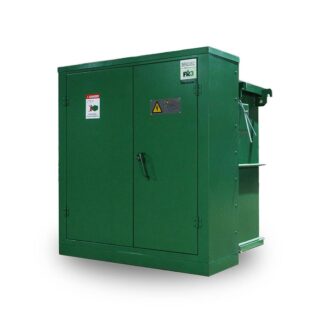
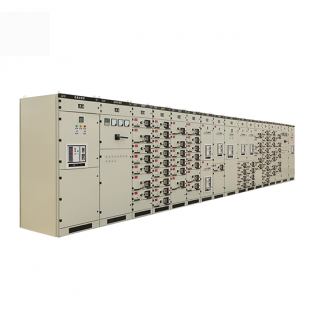
A: Yes. Luoyang Xinghe can supply box substations that integrate S15/S22 transformers with HV/LV switchgear, suitable for outdoor mining areas, solar plants and factory distribution.
If your project involves light-load continuous operation, fluctuating industrial load, grid tender efficiency requirements or non-standard altitude and anti-corrosion conditions, ask for a comparison based on your load curve, electricity price and annual operating hours. A documented S15 vs S22 calculation helps procurement teams compare suppliers on a clearer technical and cost basis.
S15 and S22 distribution transformers, custom special transformers and box substation packages at 110 kV and below.
Contact a Xinghe representative today to learn more about our Transformer.