News
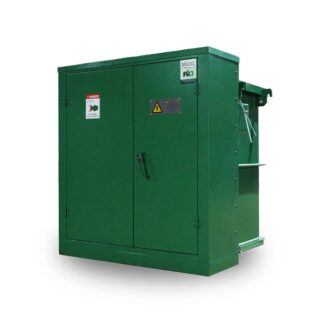
A distribution transformer is the final step in the power delivery chain – it steps down medium voltage to low voltage for direct use in homes, businesses, and industrial facilities. These transformers come in ratings from 16 kVA to 2500 kVA, and can be single-phase or three-phase, pole-mounted or ground-mounted. When selecting a distribution transformer, you typically choose between two main types: oil‑immersed or dry‑type. This guide explains the differences, voltage ranges, and how to optimize losses.
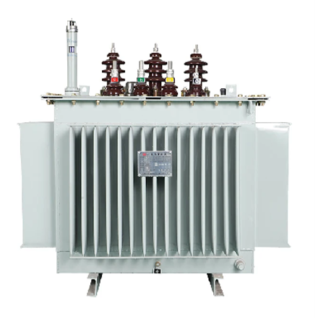
In an oil‑immersed transformer, the windings and core are fully submerged in mineral oil. The oil provides both electrical insulation and efficient heat dissipation through ONAN (Oil Natural Air Natural) cooling – the oil circulates naturally and dissipates heat through the tank walls.
Key characteristics:
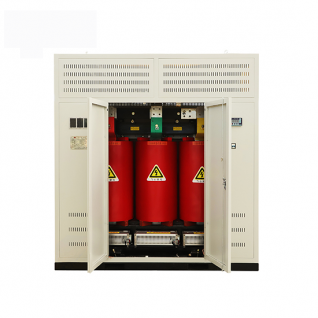
In a dry‑type transformer, the windings are insulated with epoxy resin or NOMEX® insulating paper – without any liquid coolant. Cooling relies on natural air circulation (AN) or forced air (AF) with fans.
Key characteristics:
Therefore, choose oil‑immersed for outdoor/industrial settings and dry‑type for indoor or fire‑sensitive areas.
Distribution transformers typically have two windings per phase:
| Winding | Voltage Range | Notes |
|---|---|---|
| Primary (high‑voltage) | 1.0 kV – 38.5 kV | Connects to the medium‑voltage grid |
| Secondary (low‑voltage) | ≤ 1.1 kV | Supplies end‑users (e.g., 400V three‑phase, 230V single‑phase) |
The high‑voltage winding usually includes off‑circuit (de‑energized) tappings to adjust the output voltage. Common configurations:
These taps allow you to fine‑tune the secondary voltage when the primary voltage fluctuates – but only when the transformer is de‑energized.
Transformer losses (no‑load and load losses) directly impact operating costs over the equipment‘s 20‑30 year life. We use two advanced core materials to reduce losses:
| Core Material | Advantage |
|---|---|
| Amorphous alloy | Ultra‑low no‑load losses (70–80% lower than conventional silicon steel) |
| Silicon steel (oriented grain) | Good balance of performance and cost, lower losses than standard steel |
We assign loss values using recognized standards, such as BS 7281‑1, or by applying a loss‑capitalization formula. This formula converts the capitalized cost of losses over the transformer‘s life into an economic value, helping you select the most cost‑effective design for your specific load profile.
Therefore, by selecting the right core material and optimizing the design, we deliver distribution transformers that minimize both initial purchase cost and long‑term energy waste.
| Parameter | Oil‑Immersed | Dry‑Type |
|---|---|---|
| Rating range | 16 – 2500 kVA | 16 – 2500 kVA |
| Cooling | ONAN (oil natural) | AN (air natural) / AF (forced air) |
| Primary voltage | 1.0 – 38.5 kV | 1.0 – 38.5 kV |
| Secondary voltage | ≤ 1.1 kV | ≤ 1.1 kV |
| Tapping | Off‑circuit (±2.5% etc.) | Off‑circuit (±2.5% etc.) |
| Core materials | Amorphous alloy / Silicon steel | Amorphous alloy / Silicon steel |
| Best for | Outdoor, industrial, harsh environments | Indoor, fire‑sensitive, low‑maintenance areas |
Previous: Electric Power Engineering Solution I
Contact a Xinghe representative today to learn more about our Transformer.