News
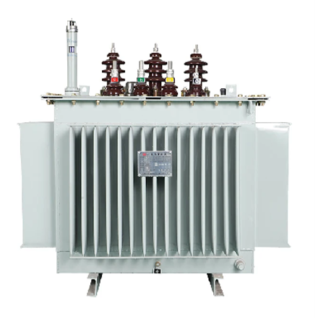
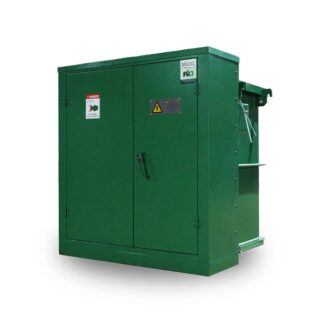
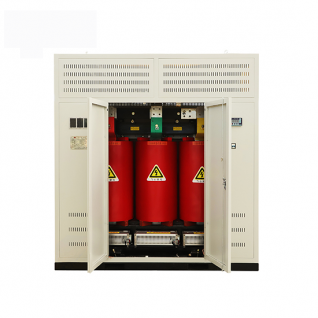
Power transformers transfer electrical energy between circuits through electromagnetic induction – performing the critical function of voltage conversion in transmission and distribution systems. However, noise generated during operation is a widespread issue that cannot be overlooked. This article systematically analyzes the causes of transformer noise and proposes targeted control strategies to help you reduce environmental impact and extend equipment life.
Transformer noise originates from multiple sources. Understanding these causes is the first step toward effective control.
| Cause | Mechanism | Characteristics |
|---|---|---|
| Core magnetostrictive vibration | Alternating magnetic field causes magnetostriction in silicon steel sheets – leading to periodic core deformation | Fundamental vibration at twice power frequency (100 Hz / 120 Hz) |
| Mechanical structural resonance | Winding vibration from electromagnetic forces; loose connections; cooling equipment operation | Particularly noticeable during load fluctuations |
| Discharge phenomena | Internal partial discharge; corona discharge from insulation anomalies | High‑frequency vibrations across a broad frequency band |
| Harmonic amplification | Harmonics distort excitation current – intensifying core vibration and potentially exciting resonance at specific frequencies | Significantly elevated noise levels |
Consequently, transformer noise arises from both electromagnetic and mechanical origins – requiring a multi‑faceted approach for effective mitigation.
Transformer noise not only affects the surrounding environment but may also accelerate equipment aging due to long‑term vibration. Effective noise control requires a multi‑level integrated approach covering source, pathway, and system management.
Reducing noise at its origin is the most effective strategy.
| Method | Benefit |
|---|---|
| Use stepped‑lap core joints and high‑permeability silicon steel sheets | Reduces magnetostriction amplitude |
| Optimize winding clamping structures and core fastening techniques | Enhances mechanical stiffness – reduces vibration transmission |
| Select low‑noise cooling equipment (fans, oil pumps) | Minimizes auxiliary equipment noise |
| Install vibration‑damping foundations | Isolates vibration from building structure |
Blocking or absorbing noise along its transmission path provides additional reduction.
Addressing external factors that amplify transformer noise:
| Phase | Action Items |
|---|---|
| Design | Specify low‑noise core materials; design for minimal magnetostriction; select quiet cooling equipment |
| Installation | Ensure proper foundation damping; verify all fasteners torqued to specification; install acoustic barriers if required |
| Operation | Monitor harmonic levels; perform regular vibration checks; clean cooling equipment to maintain efficiency |
| Maintenance | Inspect and tighten connections; replace degraded sound‑absorbing materials; recalibrate monitoring systems |
| Impact | Consequence |
|---|---|
| Environmental | Community complaints; regulatory non‑compliance |
| Equipment health | Accelerated fatigue of connections and insulation |
| Operational cost | Increased maintenance frequency; potential for unplanned outages |
| Safety | Masking of audible fault indicators |
Therefore, investing in transformer noise control delivers benefits beyond regulatory compliance – extending equipment life and improving community relations.
Transformer noise control is a systematic engineering task involving electromagnetic design, mechanical structure, and acoustic engineering. By adopting an integrated approach of “source reduction – transmission blocking – system optimization,” combined with condition monitoring and preventive maintenance, you can achieve dual objectives of equipment safety and environmental protection.
This comprehensive approach provides technical support for building a greener, quieter power grid.
Contact a Xinghe representative today to learn more about our Transformer.