News
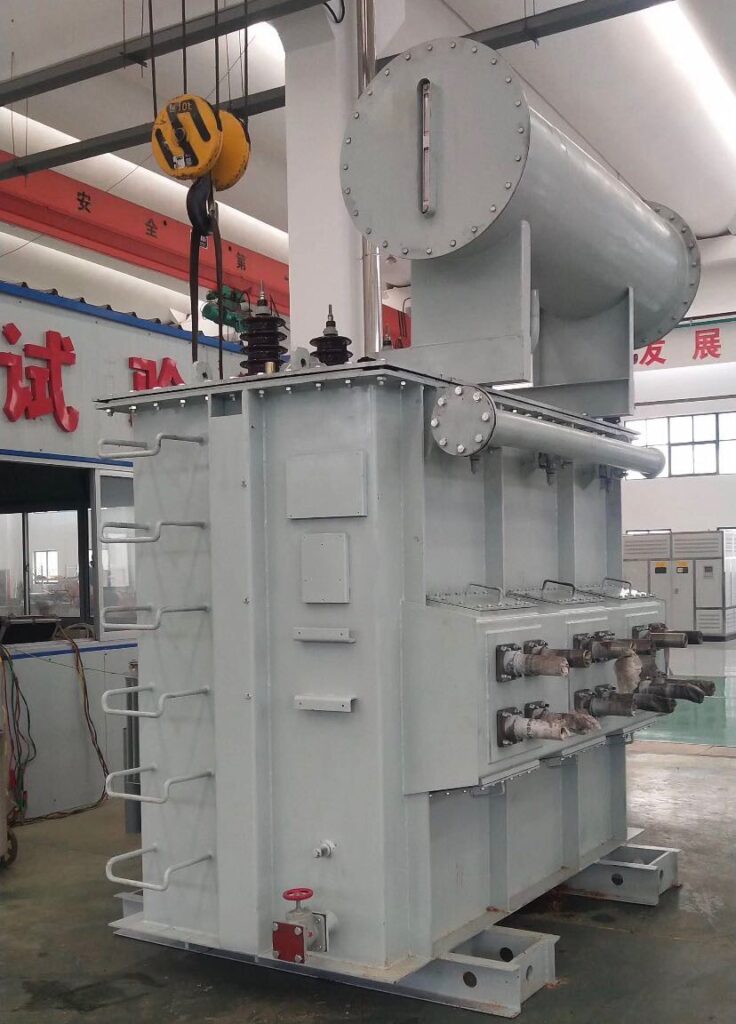
An electric furnace transformer is a specialized power transformer that supplies high‑current, low‑voltage power to electric furnaces. This transformer operates on the same fundamental principle as standard transformers, but we design it specifically to step down main supply voltage to the level required by furnace heating elements. This guide explains the working principle, key advantages, limitations, and major industrial applications of electric furnace transformers.
The primary task of an electric furnace transformer is to step down high input voltage to the low voltage needed for resistance, induction, or arc furnace elements. Because electric furnaces demand enormous power, we engineer these transformers with high current capacity and robust insulation systems. Consequently, they ensure safe, reliable operation even under severe thermal and electrical stress.
| Advantage | Benefit |
|---|---|
| High Efficiency | These transformers effectively convert high voltage to required low voltage, thereby reducing overall energy consumption. |
| Precise Voltage Control | They deliver stable output according to furnace heating requirements, thus ensuring consistent product quality. |
| High Reliability | We professionally engineer these units for long‑term stable operation in harsh industrial environments. |
| Versatility | Our transformers are compatible with induction furnaces, arc furnaces, and resistance furnaces across multiple industries. |
| High Safety | We equip them with overload, short‑circuit, and other protection devices to safeguard both equipment and personnel. |
| Limitation | Consideration |
|---|---|
| Large Size | The high‑power design requires substantial space – therefore, plan your layout accordingly. |
| High Cost | Complex insulation systems and high‑capacity components increase the initial investment. |
| Complex Maintenance | These transformers require specialized skills and equipment, which leads to higher maintenance costs. |
Electric furnace transformers see widespread use in steel plants, foundries, and metalworking shops. For example, they power resistance furnaces, arc furnaces, and induction melting equipment in these facilities.
In chemical processing, these transformers supply heat for treating raw materials such as glass, ceramics, and various metals.
They are also useful for heating concrete, gypsum, and other building materials – as well as for floor and wall heating systems.
Additionally, electric furnace transformers support waste incineration, sludge treatment, and wastewater processing applications.
| Feature | Electric Furnace Transformer | Standard Power Transformer |
|---|---|---|
| Primary voltage | High (e.g., 10kV, 35kV) | Standard distribution levels |
| Secondary voltage | Low (typically < 1kV) | 400V / 11kV etc. depending on application |
| Current capacity | Very high (thousands of amps) | Moderate to high |
| Duty cycle | Continuous with severe load fluctuations | Relatively stable |
| Cooling | Often forced oil/air due to heat | Natural or forced as required |
| Protection | Multiple safety devices for furnace duty | Standard protection |
Contact a Xinghe representative today to learn more about our Transformer.