News
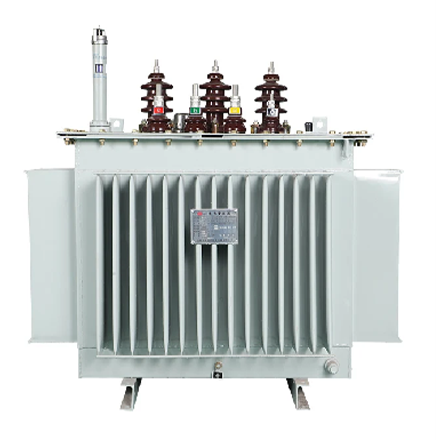
Selecting the right transformer size directly impacts system reliability, efficiency, and lifespan. Identifying and avoiding common sizing errors helps prevent costly failures and performance issues in electrical equipment. This guide covers seven critical transformer sizing mistakes – and shows you how to avoid each one.
Power factor represents the ratio of real power (kW) to apparent power (kVA) in an electrical system. This key metric indicates how efficiently your system utilizes power.
A power factor less than 1.0 means the transformer must handle more current than the load actually requires. Therefore,accurate sizing depends on proper power factor consideration.
| Power Factor | Required Transformer Size (for same load) |
|---|---|
| 1.0 | 100% of calculated load |
| 0.9 | 111% of calculated load |
| 0.8 | 125% of calculated load |
Consequences of ignoring power factor:
Sizing calculation example:
A 100 kW load with a 0.8 power factor requires:
100 kW÷0.8=125 kVA
This calculation ensures your transformer can handle both real and reactive power demands.
Peak load demand refers to the maximum power your system requires at any given moment. Accurately assessing peak periods is crucial for proper transformer capacity sizing.
An undersized transformer at peak load may experience:
Solution: Conduct thorough load profiling – measure actual demand over a full operating cycle (e.g., 7 days or one month) to capture peak values.
Environmental conditions play a crucial role in transformer performance and longevity. When transformers face harsh conditions, their capacity may derate significantly.
Best practices:
Example: A transformer rated 1000 kVA at sea level may only deliver 850 kVA at high altitude. Account for these derating factors in your initial calculations.
Many facilities experience significant power demand increases within 3‑5 years of installation. Therefore, planning for future growth is essential.
Recommended safety margin: 15–25% above current load requirements.
This buffer accommodates:
How to calculate your safety margin:
Accurate load assessment is essential for determining proper transformer capacity. A common mistake is failing to account for all equipment and their specific power requirements.
Your load calculations should include:
Key factors for accurate load assessment:
| Factor | Description |
|---|---|
| Demand factor | Ratio of maximum demand to total connected load |
| Diversity factor | Accounts for non‑simultaneous equipment operation |
| Load profile | Daily and seasonal variations in power usage |
| Power quality | Harmonic distortion from electronic equipment |
Common trap: Relying solely on nameplate ratings. Equipment rarely operates at full load continuously – using only nameplate values often leads to oversizing.
Choosing an oversized transformer might seem safe, but this practice introduces significant operational and financial drawbacks.
Key issues with oversized transformers:
Efficiency concerns:
| Operating Range | Typical Efficiency |
|---|---|
| Properly sized (60‑80% load) | 35‑50% |
| Oversized (20‑30% load) | 15‑25% |
Oversized transformers also experience:
Ideal sizing: Match your load requirements with a 10‑15% safety margin – not more. This approach optimizes performance and cost‑effectiveness while maintaining reliability.
Even properly sized transformers can fail prematurely without appropriate maintenance protocols. Your maintenance schedule directly impacts the transformer‘s ability to handle rated loads efficiently.
Essential maintenance tasks:
| Frequency | Task |
|---|---|
| Monthly | Visual inspections for oil leaks and unusual sounds |
| Quarterly | Thermal imaging to detect hot spots |
| Semi‑annually | Oil quality testing (for liquid‑filled units) |
| Annually | Electrical testing of insulation resistance |
| As needed | Cleaning of cooling fins and ventilation systems |
Impact of neglected maintenance:
Service life comparison: A well‑maintained transformer can operate at rated capacity for 20‑30 years. Without regular maintenance, its service life may shorten to 7‑10 years.
| Step | Action |
|---|---|
| 1 | Calculate total connected load with demand and diversity factors |
| 2 | Apply power factor correction (divide by PF) |
| 3 | Add 15‑25% margin for future expansion |
| 4 | Derate for altitude (if >1000m) |
| 5 | Consider ambient temperature derating |
| 6 | Verify no oversizing beyond practical limits |
| 7 | Establish regular maintenance schedule |
Proper transformer sizing is crucial for achieving optimal performance and reliability in electrical systems. The mistakes discussed in this guide can lead to serious operational problems, increased costs, and potential system failures.
You can achieve better results by:
Contact a Xinghe representative today to learn more about our Transformer.